What Global South media write about Ukraine
The Center monitors the information space of Global South countries and identifies narratives favorable to russia. In recent days, the key Ukraine-related topics have included:
– the russian missile strike on Sumy, which killed civilians;
– prospects for peace negotiations in Ukraine;
– participation of Chinese nationals in the war against Ukraine;
– President Volodymyr Zelenskyy’s interview with CBS News 60 Minutes.
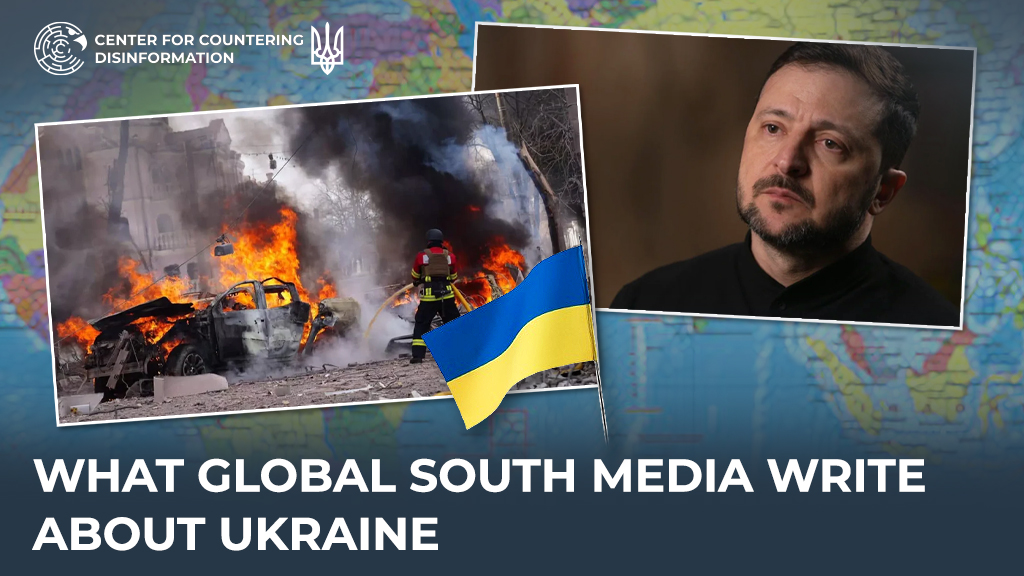
The russian missile strike on the city of Sumy, which claimed the lives of 35 Ukrainian civilians, sparked major resonance across Global South countries. In most regions, this event was covered as a war crime committed by russia.
Talks between the United States and russia were often covered in connection with the russian strike on Sumy, implying their ineffectiveness and expressing skepticism about the possibility of a swift resolution. The previously dominant optimistic expectations about peace talks in Global South media have now largely been replaced by more skeptical tones.
Volodymyr Zelenskyy’s interview with CBS News received widespread coverage across Global South countries, with the greatest attention in India and China. His invitation to U.S. President Donald Trump to visit Ukraine also drew significant attention.
In Africa and the Middle East, some media outlets circulated a fake claim that Ukraine had publicly expressed support for the separatist armed movement in Mali — known as the Azawad Liberation Front. The periodic appearance of such false messages, especially on topics sensitive for Africa, may indicate a deliberate campaign to discredit Ukraine on the continent, a tactic beneficial to russia.
Key narratives of russian propaganda:
– Ukraine is sabotaging efforts to reach a partial ceasefire;
– the crisis in Ukraine is a profitable business for the U.S. military-industrial complex;
– Ukraine openly supports terrorists and separatists in Africa;
– Ukraine should give up part of its territory for the sake of peace;
– Ukraine is a puppet of the Western world, entirely dependent on decisions made by the U.S. and NATO.