Analytical report «Research on the destructive impact on the discourse surrounding the mobilisation process in Ukraine»
The Center for Countering Disinformation (hereinafter – the Center) monitored the information space from October 1 to December 31, 20251 with the aim of identifying and analysing the destructive influence on the discourse surrounding the mobilisation process in Ukraine.
The focus is placed on analysing actors who display inauthentic behaviour, disseminate material from pro-russian Telegram channels and calls for physical violence against representatives of the Territorial Recruitment and Social Support Centers (TRSSC) as well as on identifying networks involved in the dissemination of destructive content.
Methodology:
Specialised software was used to determine the extent to which publications promoting these destructive narratives were disseminated, to assess how they were received by the audience, to identify the main platforms used for dissemination, and to document instances of inauthentic behaviour.
The data obtained using specialised software was subsequently analysed in depth by analysts.
[1] The time frame of the research was determined experimentally, taking into account the specific nature of this new direction, which involves the analysis of inauthentic behaviour and networks involved in the dissemination of destructive content. The selected period made it possible to validate the methodological approach and obtain statistically significant results.
As a result of the conducted analysis, the Center has drawn the following conclusions:
Between October 1, 2025 and December 31, 2025, the Center recorded over 85,400 publications containing destructive narratives regarding mobilisation. In total, these received over 419.7 million views and 13.86 million interactions, indicating a significant level of information reach and audience engagement.
The primary target audience for destructive information influence is men of conscription and pre-conscription age, as well as their relatives, who constitute the most vulnerable and emotionally engaged audience.
The research identified 4331 sources exhibiting signs of inauthentic behaviour, primarily on the Telegram messenger and the social network Facebook, which are used to mass-distribute destructive content and mimic public opinion in the information space. The posts disseminated by these sources garnered a total of over 5.7 million views.
Examples of some sources:
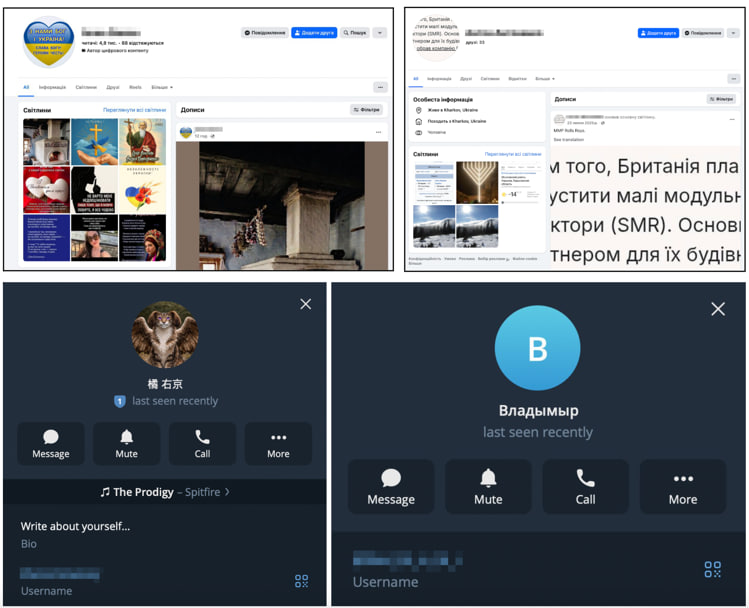
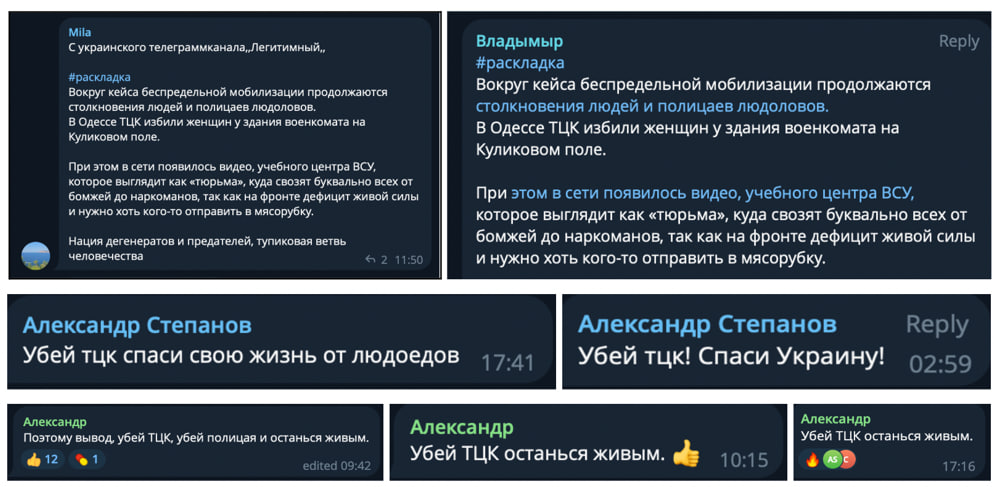
Examples of the dissemination by inauthentic actors of content from pro-russian Telegram channels and calls for physical violence against representatives of the Territorial Recruitment and Social Support Centers:
A comparative analysis of the dissemination of destructive narratives identified 194 sources that appear in three or more of the analysed narratives. Such cross-activity may indicate the functioning of a network of coordinated inauthentic behaviour aimed at the systematic dissemination of destructive messages regarding mobilisation.
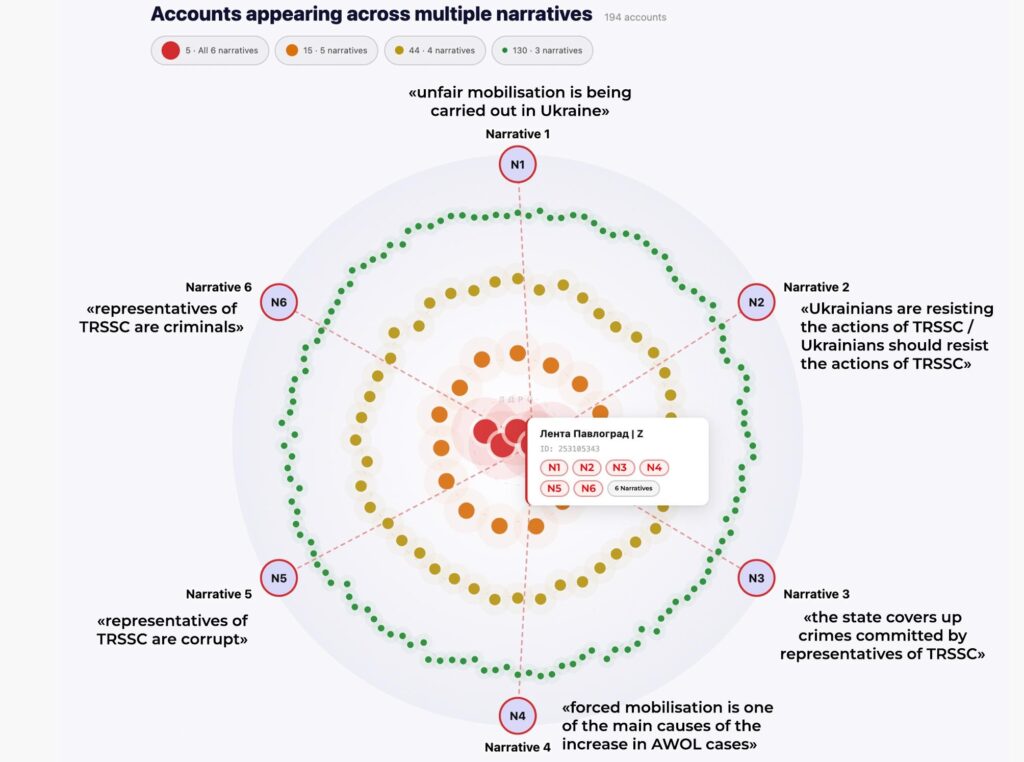
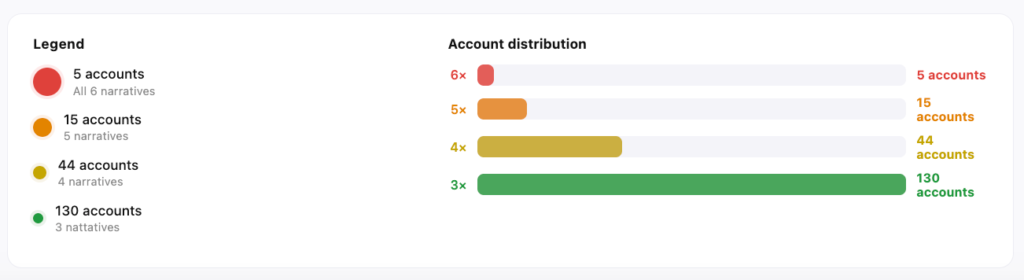
However, to confirm this hypothesis, the identified accounts require further analysis by the relevant authorities, as well as by representatives of the social media platforms on which they operate.
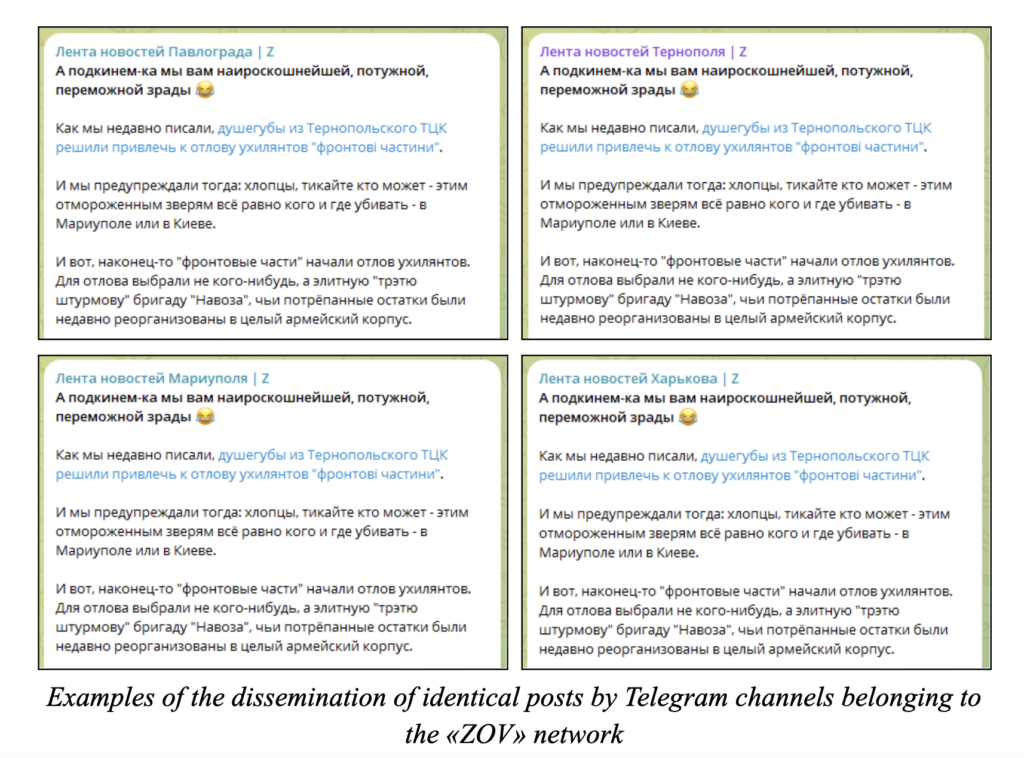
It has been established that organised propaganda networks are actively involved in the dissemination of destructive narratives, in particular the «ZOV»2 network previously identified by the Center, which uses a network of websites, Telegram channels and pages on the social network VKontakte to disseminate propaganda content tailored to specific regions of Ukraine.
[2] Link: https://cpd.gov.ua/reports/analitychnyj-zvit-merezha-rosijskyh-propagandystskyh-resursiv-zov/
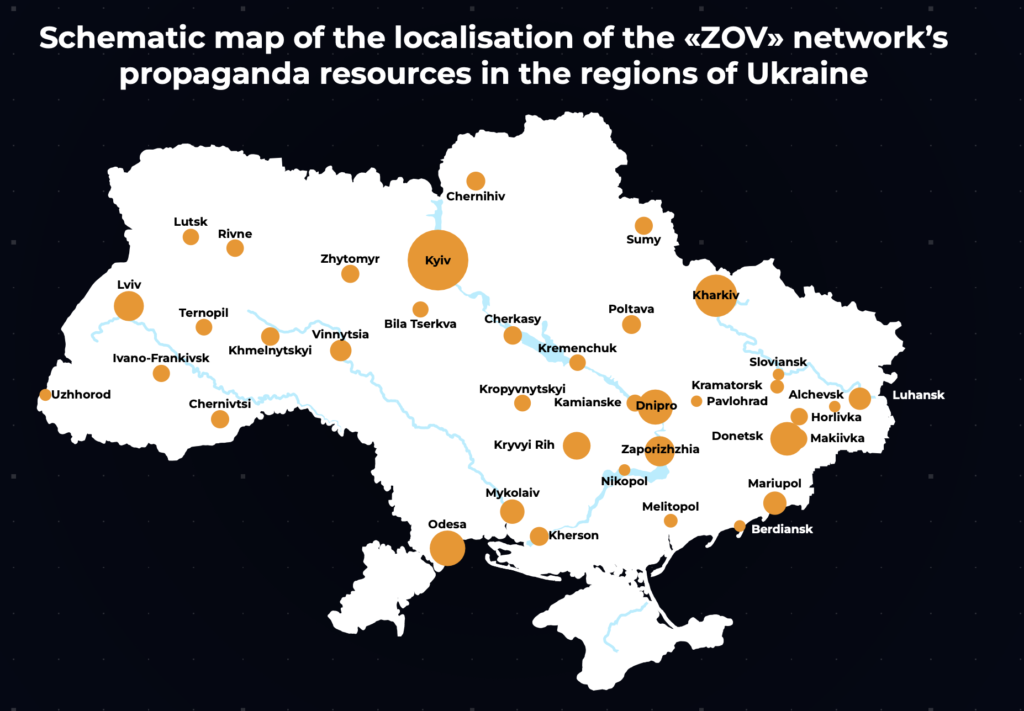
It is important to note that the Center, using the Whois service, has established technical links between the identified network and the aggressor state: all of the network’s identified websites are registered via the russian hosting provider and domain name registrar «Рег.ру» (Reg.ru), (moscow).
Furthermore, according to information from open sources, the founder and administrator of this network is Yevgeny Oleksandrovych Shevchenko, who manages the network through TigerWeb, an IT company registered in the russian federation. It is important to note that a number of countries have imposed sanctions on Yevgeny Shevchenko for implementing and supporting actions and policies attributed to the government of the russian federation.
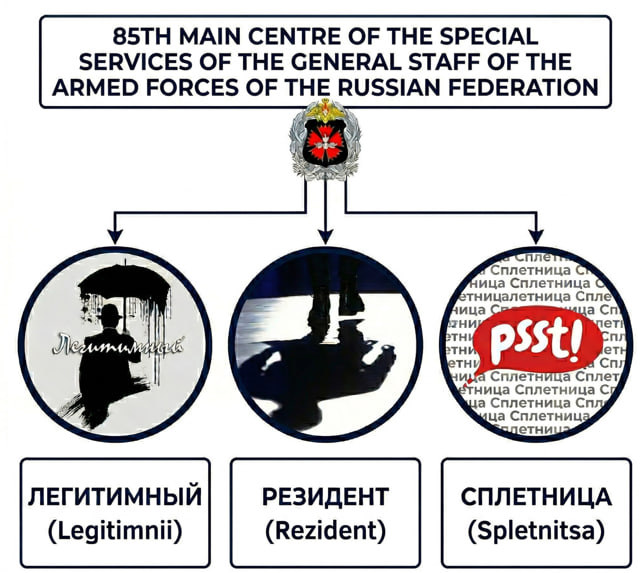
A distinctive role in promoting destructive narratives belongs to Telegram channels «Легитимный» (Legitimnii), «Резидент» (Rezident), and «Сплетница» (Spletnitsa), which, according to the Security Service of Ukraine3, are linked to the 85th main center of the special services of the general staff of the armed forces of the russian federation and act as key amplifiers of manipulative messages.
The total number of subscribers to the above-mentioned information resources exceeds 2.3 million.
Taken together, these factors indicate that the aggressor state is systematically employing tools of information and psychological influence on the discourse surrounding the mobilisation process in Ukraine. The influence on public sentiment is exerted through the dissemination of destructive narratives, the use of networks of coordinated inauthentic behaviour, and the involvement of organised propaganda resources.
The primary aim is to undermine trust in state institutions, foster a negative attitude towards mobilisation, exacerbate social tensions within Ukrainian society and polarise it, with the strategic objective of weakening the state’s defence capabilities.