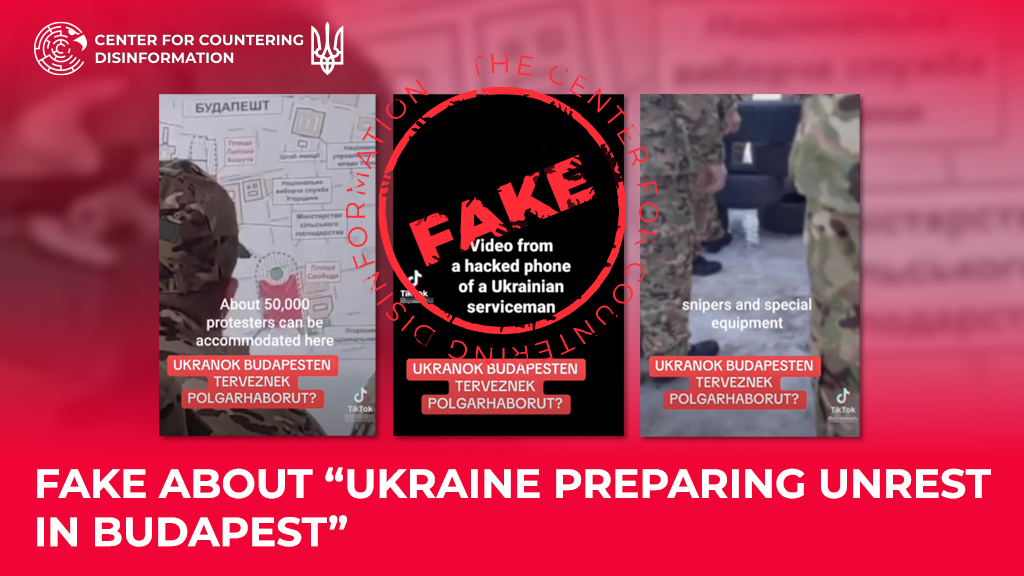
Fake about “Ukraine preparing unrest in Budapest”
The Center has identified a russian information and psychological operation aimed at discrediting Ukraine ahead of elections in Hungary.
A fake video is circulating on social media, allegedly showing Ukrainian soldiers discussing preparations for unrest in Budapest following a “Maidan scenario.” The footage is presented as if it were “leaked” from a Ukrainian serviceman’s phone.
In reality, the video shows clear signs of staging. The individuals in the footage are wearing military uniforms without insignia—indicating no real attempt at concealment, as the uniforms appear to be used solely to attract attention. The video does not reveal faces or any identifiable details that could confirm the individuals or the location. Although the speakers use Ukrainian, their behavior and context appear unnatural and artificial. The staged nature is further emphasized by a large map on the wall clearly labeled “Budapest.” russia produces similar videos on a monthly basis to discredit Ukrainian forces, often involving agencies and theatrical studios working with the aggressor’s defense ministry.
It is also notable that the first publications of the video appeared on accounts that systematically spread anti-Ukrainian narratives aligned with russian propaganda. At the same time, there has been increased activity among pro-russian blogger networks promoting claims of alleged “Ukrainian interference” in Hungary’s elections.
According to available information, the dissemination of this video is part of a coordinated operation. To carry it out, former members of the “Berkut” unit—who fled to russia after 2014—were likely brought to Budapest. Their possible role is to participate in staged provocations or to fabricate “evidence” for further accusations against Ukraine.
The objective of this operation is to create a pretext for accusing Ukraine of interfering in the internal affairs of European states, particularly electoral processes, to undermine trust in Ukraine among its partners, and to influence the domestic political situation in EU and NATO countries.