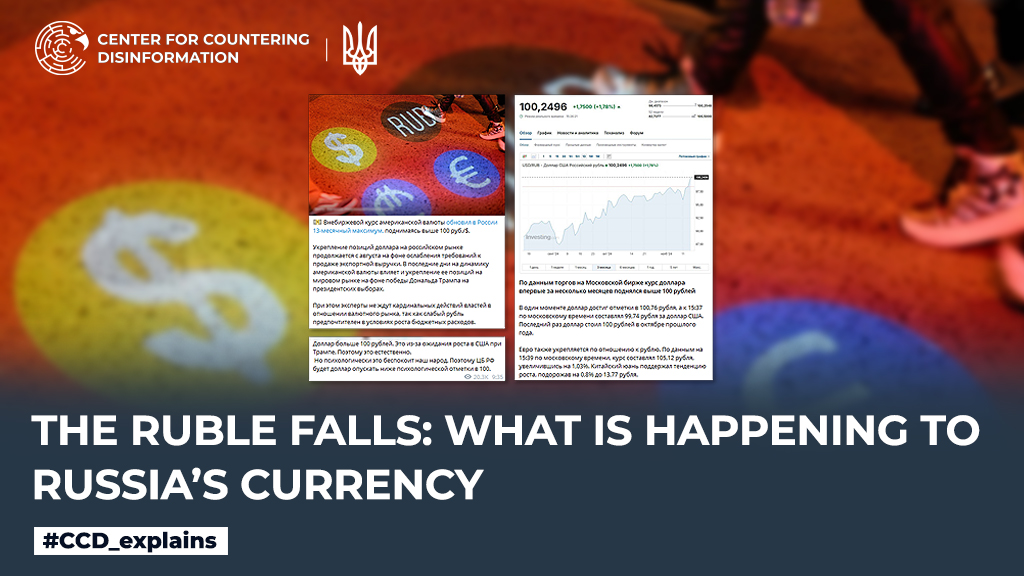
The ruble falls: what is happening to russia’s currency
For the first time in a year, the russian ruble has crossed the psychological threshold of 100 to the dollar, and analysts predict the situation could worsen.
The ruble’s decline is driven by both external and internal factors. Falling global oil prices over the past few days have significantly impacted the currency, with further decreases in oil prices expected to continue pushing the ruble down.
Additionally, individuals and businesses in russia are buying more foreign currency than they are selling, adding pressure on the ruble. Internally, the russian central bank appears unable to stabilize the currency. Despite a significant increase in foreign exchange revenues from major exporters in October, the ruble’s value continued to fall.
Analysts now warn that the exchange rate could collapse to 120 rubles per dollar or even lower. This grim forecast may lead russians to withdraw their savings en masse to avoid devaluation. Faced with this, the russian central bank might have no option but to freeze deposits, as massive withdrawals could collapse the banking system and drive inflation to levels reminiscent of the 1990s.
Since the start of the full-scale invasion of Ukraine, the ruble has lost nearly half its value – falling from 53 rubles to the dollar in 2022. With the kremlin showing no intention of ending the war, the ruble’s downward spiral is likely to continue.