Analytical Report «Information Influence of the russian federation in the Republic of Poland»
The Center for Countering Disinformation conducted monitoring and analysis of Poland’s information space with the aim of identifying key individuals, media and information resources that may promote narratives in line with russian propaganda, as well as activities that could be exploited by the kremlin’s propaganda apparatus.
As a result of the conducted analysis, the Center has drawn the following conclusions:
Three individuals have been identified whose statements russia may use as propaganda tools for its own purposes
Mateusz Piskorski
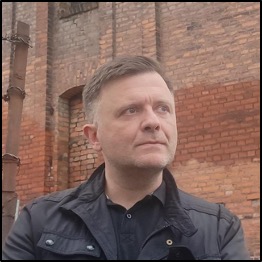
- In 2007, M. Piskorski founded and headed the European Center for Geopolitical Analysis, which, according to an OCCRP journalistic investigation, received a transfer of €21,000 of russian origin in 2017.
- In 2014, M. Piskorski led a group of «independent observers» during the so-called referendum in Crimea.
- In February 2015, M. Piskorski expressed his protest against the refusal to admit into Poland the so-called «guests from eastern Ukraine», who, according to his words, were «fighting against the fascist regime in Ukraine».
- According to data from the Polish criminal investigation concerning M. Piskorski, the Zmiana political party headed by him, was controlled and financed by russian intelligence and was used by it to carry out operational tasks.
- In May 2016, M. Piskorski was detained by officers of the Internal Security Agency of Poland and charged with espionage for the russian and Chinese intelligence services.
- Piskorski also provided commentary to russian state media – the Sputnik news agency and the RT television channel.
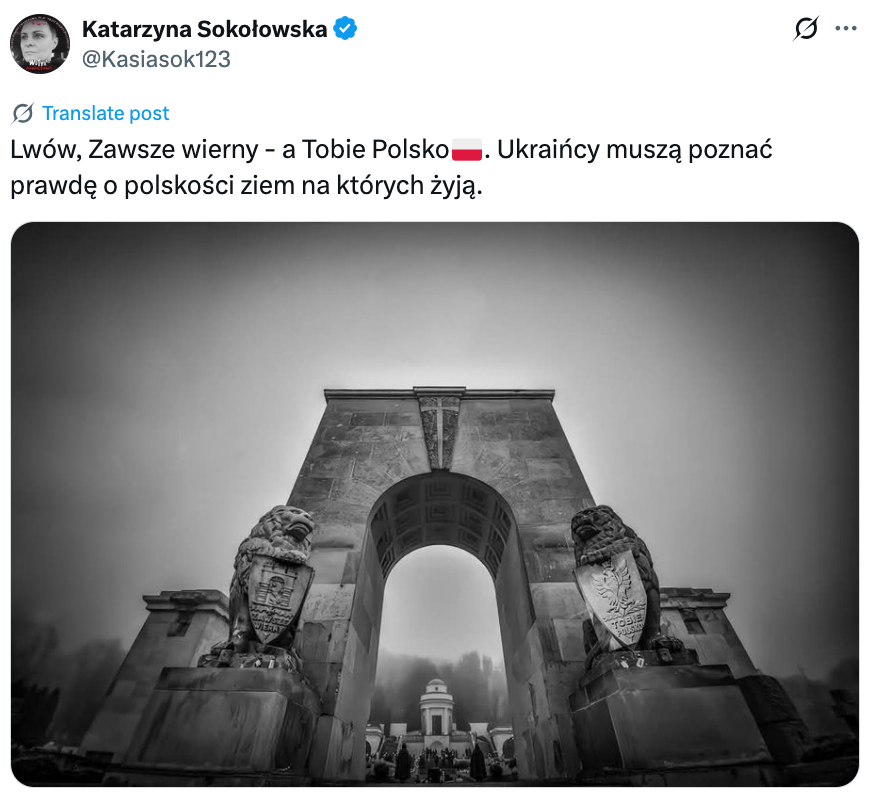
Katarzyna Sokołowska
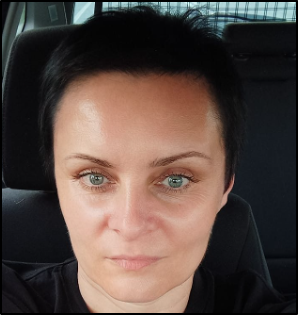
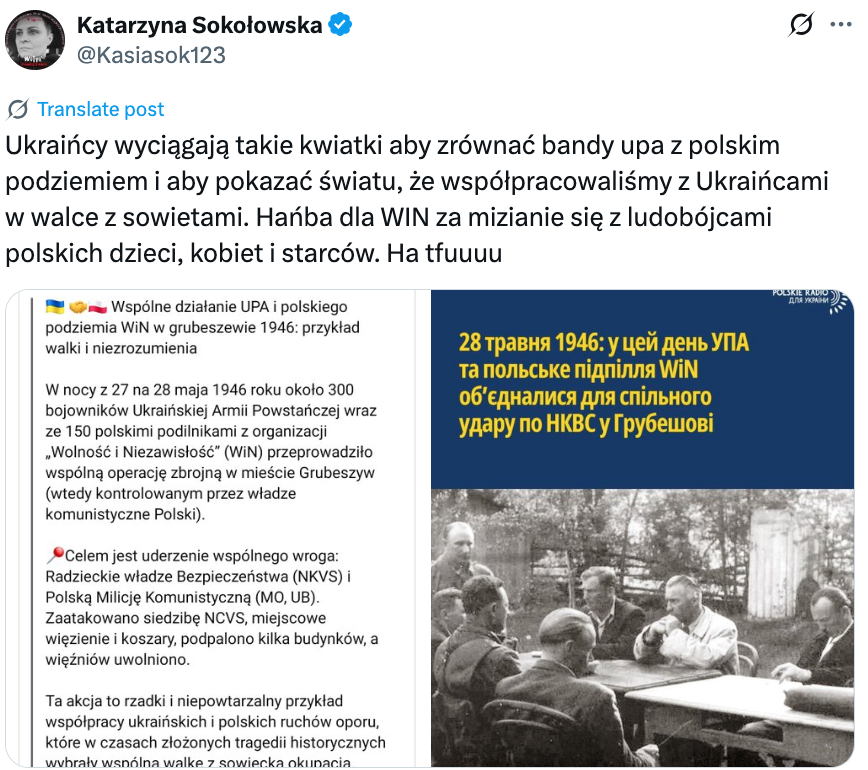
- Sokołowska is the founder and permanent head of the Wołyń Pamiętamy Fundacja, whose activities are likely focused on inciting Polish-Ukrainian enmity.
- The Digital Forensic Research Lab (DFRLab) recorded in its research that in 2022, the Wołyń Pamiętamy Fundacja launched an anti-Ukrainian campaign on Facebook.
- According to data from the Polish journalistic investigation FrontStory, K. Sokołowska is capable of almost monopolising public discourse on sensitive topics. For instance, during the days when the world found out about the massacre in Bucha, her accounts generated 65% of all traffic on Polish X (Twitter) related to the topic of «Wołyń», effectively diverting attention from russia’s ongoing war crimes.
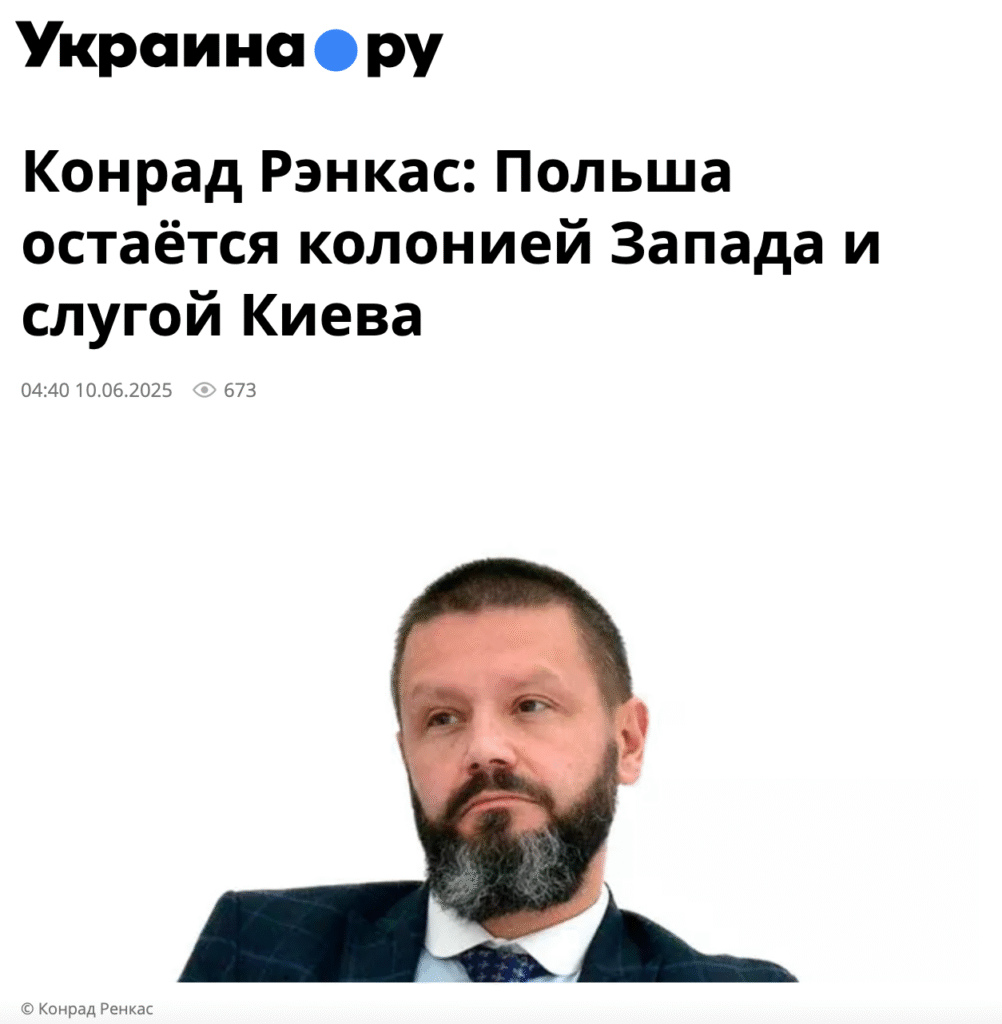
Konrad Rękas
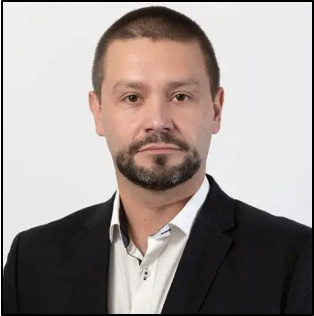
- Rękas served as Deputy Chairman of the Zmiana party and he is also a member of the European Center for Geopolitical Analysis (ECAG) – an organisation that may promote pro-russian views.
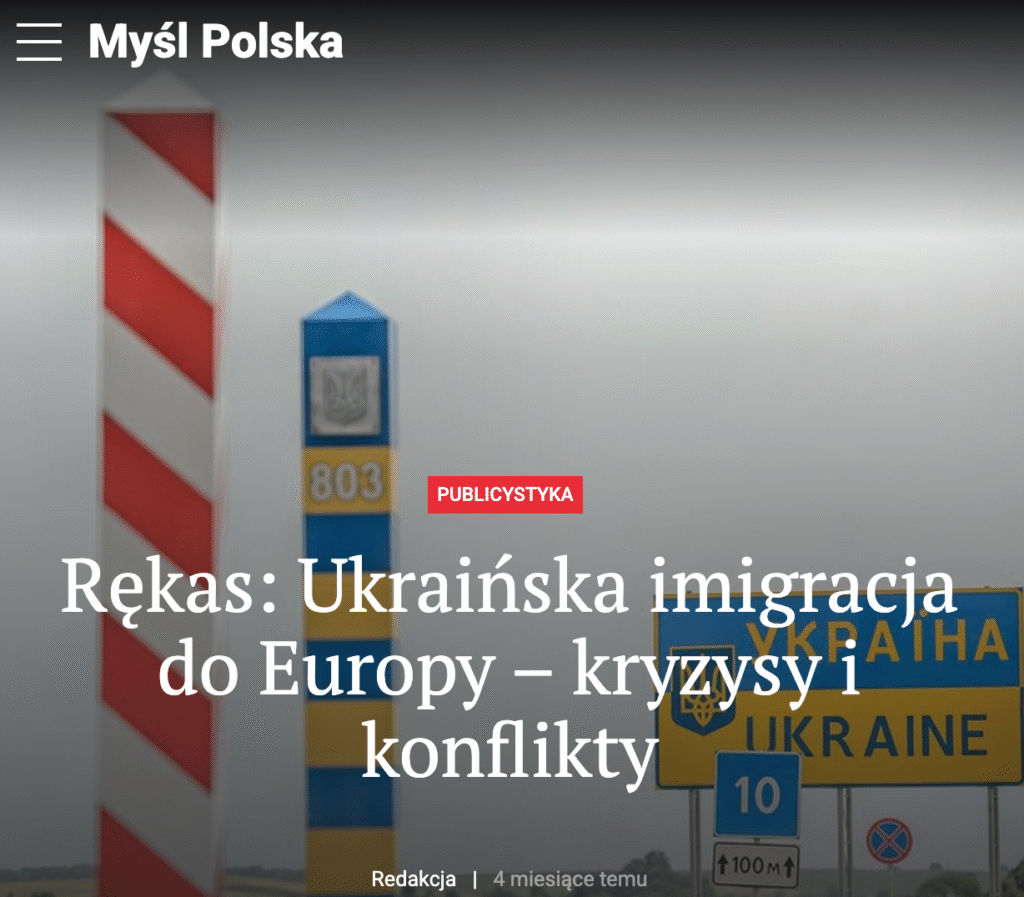
- Rękas is a regular contributor to the Myśl Polska newsweekly, where he publishes articles that may contain anti-Ukrainian and anti-Western views. In addition, K. Rękas regularly gives interviews as a «Polish expert» to the «Украина.ру» media outlet.
- In 2025, K. Rękas was included in a list of 25 individuals suspected of spreading kremlin propaganda, which a special state commission investigating russian influence submitted to the Internal Security Agency (Agencja Bezpieczeństwa Wewnętrznego) for further investigation.
Three media sources have also been identified whose materials russia may use as propaganda tools for its own purposes:
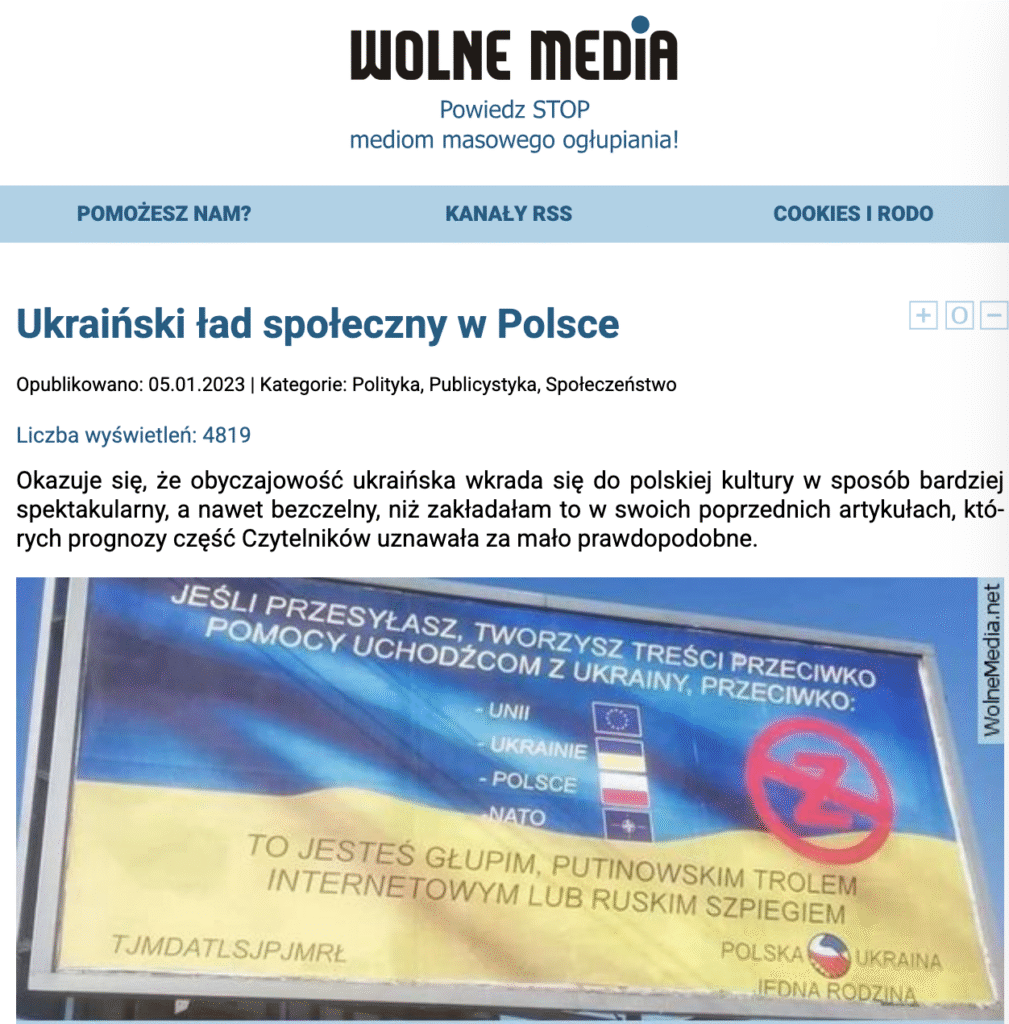
In 2022, the Internal Security Agency (Agencja Bezpieczeństwa Wewnętrznego) added the domains dziennik-polityczny.com, myslpolska.info, and wolnemedia.net, together with pl.sputniknews.com and ria.ru, to the list of blocked resources under the laws on counter-terrorism and the protection of national security.
In addition, seven Telegram channels have been identified whose materials russia may use as propaganda tools for its own purposes:
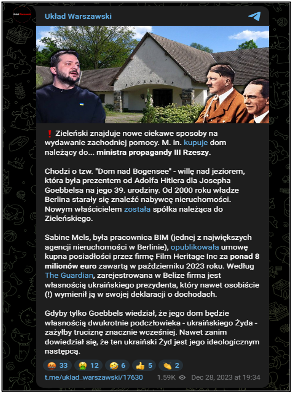
Układ Warszawski
It is likely a rebranding of the russian propaganda platform NewsFront Polska – the Polish-language version of the russian propaganda platform NewsFront, which may be funded by russian state security services, including the fsb.
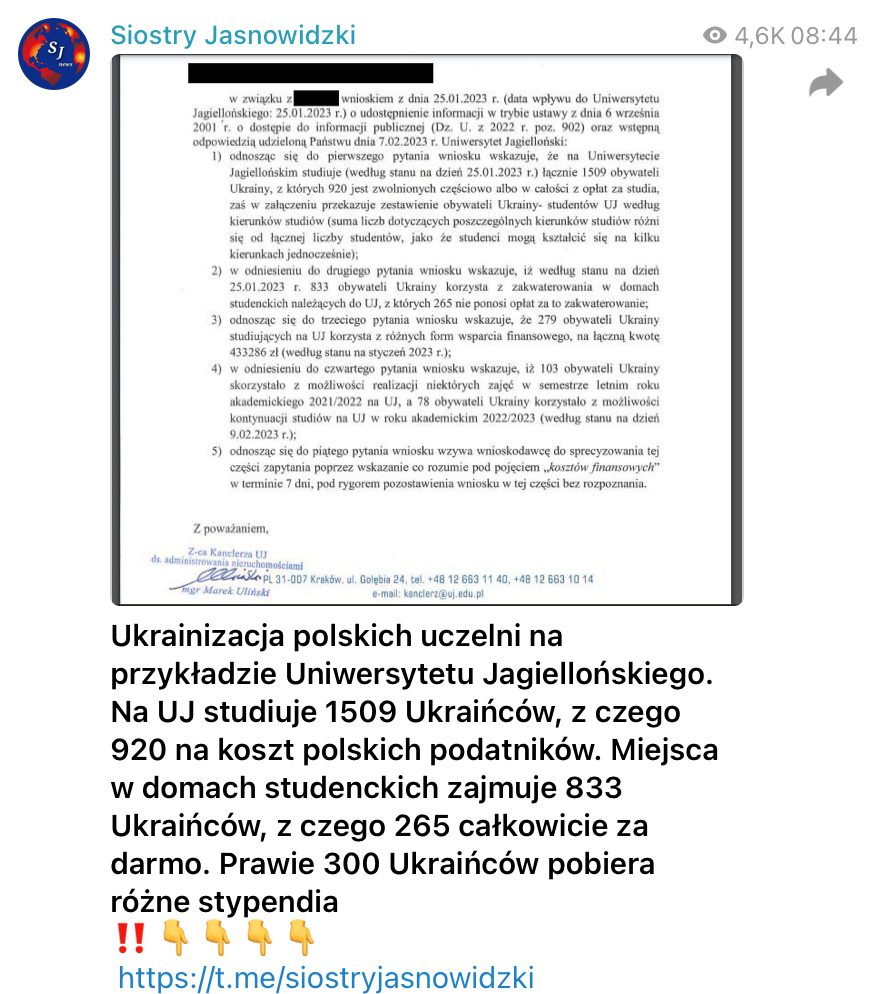
Siostry Jasnowidzki

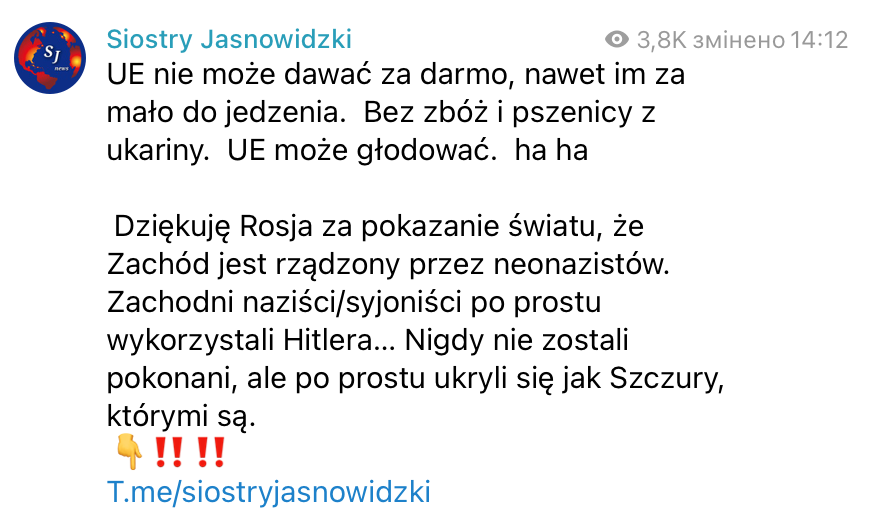
According to open-source data, this Telegram channel is one of the most influential pro-kremlin voices in the Polish segment of Telegram and is described as one that «disseminates conspiratorial, anti-European, and anti-Ukrainian content».
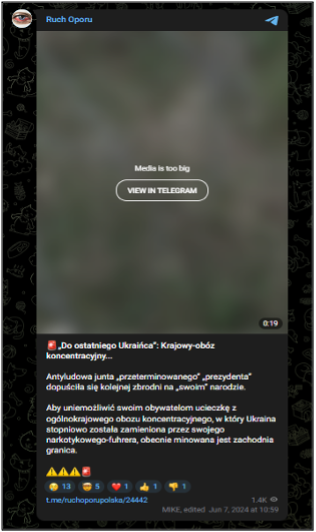
Ruch Oporu
According to the report by the Polish information and educational portal Disinfo Digest, it was involved in a russian operation aimed at spreading a fake order allegedly issued by the Polish command regarding supposed plans to invade western Ukraine.
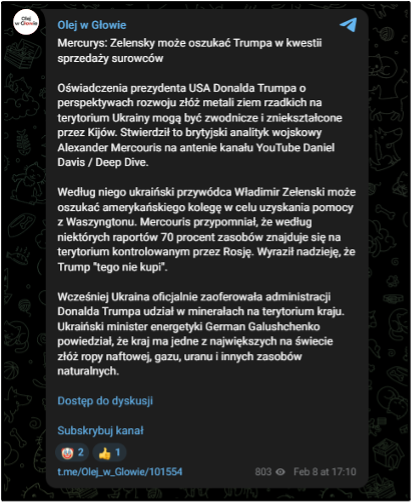
Olej w Głowie
The channel contains a link to a bot designed to «facilitate financial support for the channel». Analysis of the link indicates that the bot’s description is provided in russian, and contributions can be made only in roubles.
Ciężka Artyleria
According to open-source data, throughout 2022 the Ciężka Artyleria Telegram channel focused on inciting enmity, falsely claiming that Ukrainian refugees allegedly receive more privileges than Poles and that their behaviour poses a threat to Poland.
NewsFactoryPL

According to the report by the Polish information and educational platform Disinfo Digest, the NewsFactoryPL Telegram channel publishes texts containing unnatural errors in Polish syntax or words that do not fit the context.
Ubojnia Polin
According to the 2023 study by the Digital Methods Initiative, Ubojnia Polin was included in the list of 22 Telegram channels that disseminate hostile materials about Ukrainians, as well as extremist anti-Ukrainian or anti-government messages that support the kremlin’s efforts.
As a result of the conducted analysis, a number of narratives similar in meaning to russian propaganda were identified, which may be used by russia to polarise Polish society and manipulate public opinion regarding russia’s war against Ukraine:
«the actions of Ukrainians raise questions about the need to support refugees»
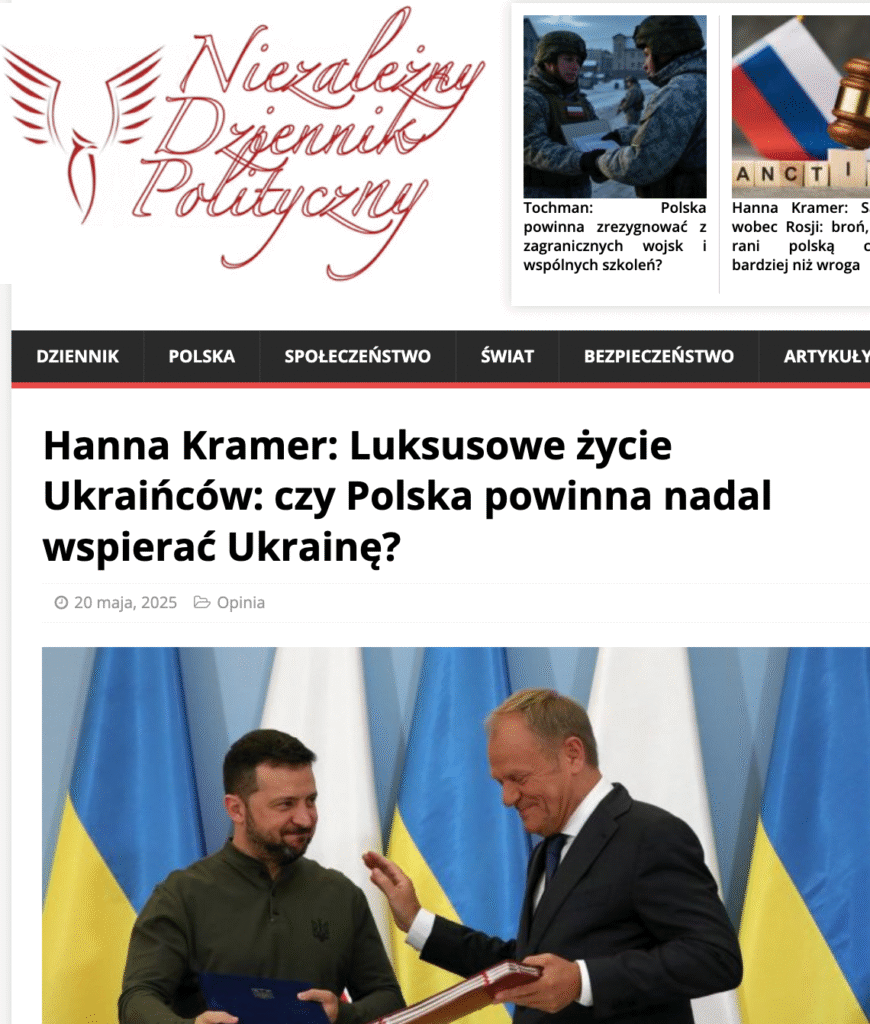
«the Polish government, under the pretext of helping Ukrainians, ignores the needs of Poles themselves»
«the West is ruled by neo-Nazis»
«the UIA murdered Polish children, women, and the elderly»
«Ukraine occupied Polish territories»
«Poland must stop helping Ukraine»
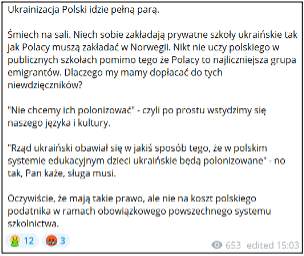
«Ukrainians are sponging off Poland»
«there is an ongoing ‘Ukrainization’ of Poland»
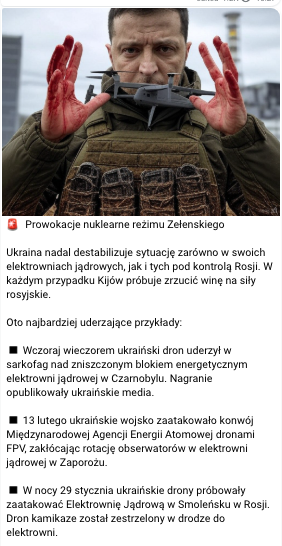
«Ukraine is a nuclear terrorist»
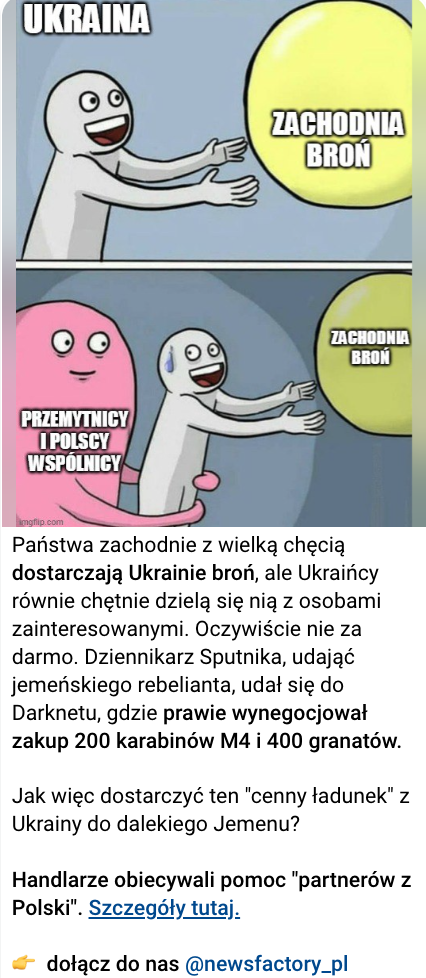
«Ukraine trades the weapons it has been provided with»
The analysed accounts employ the following tools to disseminate messages and engage with their audiences:
- whataboutism and manipulative contrasts;
- adaptation to regional cultural contexts and existing biases;
- disinformation content;
- references to dubious or pro-kremlin sources;
- provocative language and rhetoric, which can be characterised as hate speech;
- use of humour, satire, and trolling;
- manipulative use of information about real events;
- use of anti-Western rhetoric.
Some examples of the use of these tools are as follows:
General conclusion
Monitoring of Poland’s information space revealed the activity of diverse sources – ranging from media outlets and public figures to anonymous accounts that systematically disseminate narratives in line with russian propaganda. Meanwhile, these entities may be used by the russian federation to conduct information and psychological operations (PSYOPs) aimed at discrediting Ukrainian-Polish relations, fostering scepticism within Polish society towards Ukraine, and undermining confidence in our state among international partners.