The Center’s Information Threat Forecast For the second half of november 2025
1.Information Campaign Surrounding the NABU Investigation
The NABU investigation into possible corruption in Ukraine’s energy sector is likely to be accompanied by intensified disinformation campaigns by russian propaganda aimed at discrediting the Ukrainian authorities and undermining international support for Ukraine. The core narrative will focus on persuading Western audiences that “Ukraine is not worth supporting.”
kremlin-affiliated propaganda outlets will disseminate distorted interpretations of Western media reports to create the false impression that even leading Western publications consider further support for Kyiv futile.
Another vector of the campaign will target Ukraine’s domestic audience. russian propaganda will promote narratives about “pervasive corruption” in Ukraine, deliberately overlooking that the transparency of investigations and the response of Ukrainian institutions actually demonstrate the effectiveness of anti-corruption mechanisms.
Additionally, russian propaganda will attempt to incite protests in Ukraine and link corruption narratives to power outages, claiming that “energy shortages are a result of embezzlement” rather than russian missile strikes targeting Ukraine’s energy infrastructure.
2. Information Attacks Related to Power Outages
Amid rolling power outages in Ukraine caused by massive strikes on energy facilities, russian propaganda will intensify efforts to portray widespread social discontent allegedly directed exclusively at the Ukrainian government. The key objective is to persuade both domestic and international audiences that energy supply disruptions are the result of “incompetence” or deliberate actions by Kyiv, rather than targeted missile attacks by russia against critical infrastructure.
One of the key tactics will be the dissemination of short TikTok-style videos featuring alleged “eyewitness accounts” — some of which may be generated with AI to imitate emotional public reactions. These videos will be amplified by mass-produced bot comments calling for immediate action, including protests against the government. Disinformation will also be promoted claiming that outages are caused by “energy exports abroad” or preparations for “upcoming tariff increases.”
Overall, an intensified wave of social media content is expected, seeking to shift attention away from russia — the state whose strikes disabled Ukraine’s energy infrastructure — and redirect it toward an alleged “internal enemy.”
3. Information Campaigns Ahead of the Anniversary of the Revolution of Dignity
In the lead-up to the anniversary of the Revolution of Dignity (November 2013), a large-scale russian propaganda campaign is expected, aimed at discrediting Ukrainian revolutions, their participants, and democratic processes in general. russian information outlets traditionally use these dates to amplify destructive narratives about a “coup d’état,” “external governance,” and the “chaos allegedly caused by color revolutions.”
A wave of publications and talk shows is expected across central russian media, television, and major propaganda Telegram channels, portraying Ukrainian revolutions as a “catastrophe” that allegedly resulted in the “collapse of statehood,” “economic destruction,” and “loss of sovereignty.” The messaging will emphasize claims that the Maidan was “orchestrated by the West” and driven by an “elite conspiracy.”
A key propaganda technique will be contrasting a “chaotic, rebellious Ukraine” with a supposedly “stable and peaceful russia.” kremlin-affiliated outlets will present the russian authoritarian model as a “guarantee of order,” while depicting Ukraine’s democratic system as a “path to destruction.” This narrative will be used to justify the suppression of any civic activism inside russia by portraying the “Ukrainian scenario” as a cautionary tale.
It is likely that so-called experts and former Ukrainian politicians who fled to russia after the Revolution of Dignity will be mobilized. They will appear in talk shows, conferences, and roundtables, presenting themselves as “victims of Maidan.” Their statements will be used to reinforce propaganda narratives about the “artificial nature of the revolutions” and the “destructive role of the West.”
In parallel, an information operation tentatively labeled “Maidan-3” may be intensified — promoting narratives about an alleged “new coup being prepared” in Ukraine. The propaganda effort will attempt to frame any internal discussion of social or political challenges as evidence of an impending “coup scenario.”
4. Increased Use of AI-Generated Videos to Discredit Ukraine on TikTok and X
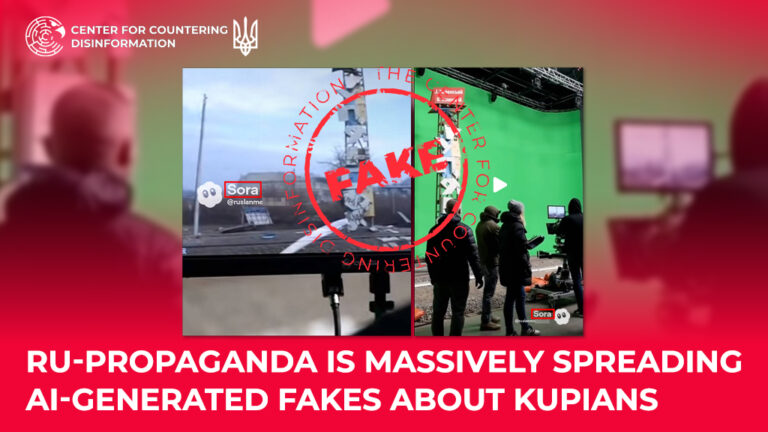
Recently, the Center has recorded a surge in the use of videos created or altered with artificial intelligence by russian propaganda. A further escalation of this tactic is expected, targeting both Ukrainian and international audiences.
By disseminating AI-generated fakes, russians will attempt to sow doubt, undermine confidence in state institutions and Ukrainian defenders, and distort perceptions of the situation in Ukraine among both domestic and international audiences. These materials will include fake short addresses, fabricated “confessions” of prisoners, claims of “inevitable defeat,” and other hostile narratives. The videos will be amplified by mass bot-generated comments supporting the propaganda messages.
This campaign will be hybrid in nature, combining AI-generated content with the coordinated use of bot networks, fake accounts, and synchronized publications across pro-russian media outlets.
5. Disinformation Campaigns Ahead of the Holodomor Remembrance Day
Ahead of the Holodomor Remembrance Day, a traditional wave of disinformation and manipulative content from russian propaganda is expected. kremlin-controlled media, pseudo-historians, and affiliated analytical platforms will attempt to deny the Holodomor as an act of genocide against the Ukrainian people, framing it instead as a “shared tragedy of the peoples of the ussr” or as a “result of drought and economic difficulties.”
The primary objective of this campaign is to devalue the historical significance of the Holodomor, undermine its international recognition as a genocide against the Ukrainian people, and create the impression among global audiences that Ukraine’s commemoration of the tragedy is merely a “political tool” used against russia. To this end, russian “experts” and historians known for their loyalty to the kremlin will be actively engaged. They will publish interviews and pseudo-academic articles and appear on talk shows claiming that the “mass famine affected all regions of the ussr” and “was not artificially created.”
Overall, the information campaign will focus on justifying soviet totalitarianism, eroding the Ukrainian historical narrative, and undermining international support for recognizing the Holodomor as genocide.
6. Continued Information Campaign Aimed at Discrediting the Defense Forces of Ukraine
russian propaganda will continue filling the information space with false narratives about both the internal situation within Ukraine’s Defense Forces and alleged “war crimes” committed by the Ukrainian military. The purpose of these messages will be to discredit Ukraine’s Defense Forces and exert emotional influence on Ukrainian and international audiences.
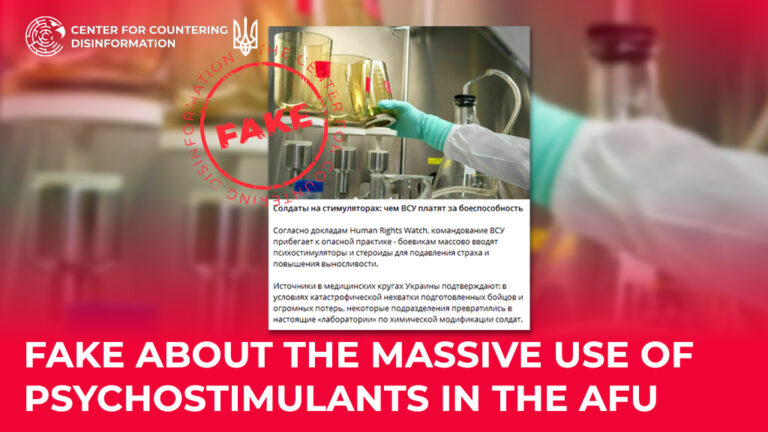
An increase in the dissemination of fakes is expected, including claims about “barrier troops,” the use of prohibited weapons, looting in frontline regions, and similar fabrications. Particular emphasis will be placed on accusations that “Ukrainian soldiers are using civilians as human shields.”
Another expected line of disinformation includes fake reports alleging Ukrainian strikes against civilians in russia, while propaganda will simultaneously insist that russia “targets only military facilities.”
Special attention will be given to narratives portraying Ukrainian soldiers as allegedly “doomed to defeat,” “incapable of resisting the russian army,” acting under “criminal orders,” or “surrendering en masse.” In parallel, the campaign to discredit Ukraine’s mobilization efforts will intensify. Through these narratives, ru-propaganda will seek to instill a sense of hopelessness within Ukrainian society and provoke division between military personnel and civilians.
7. Discrediting EU and US Sanctions
The Center forecasts continued attempts by russian propaganda to discredit the sanctions imposed by the EU and the United States. kremlin-controlled media will continue promoting narratives about the alleged “illegitimacy” and “ineffectiveness” of the sanctions, emphasizing supposed negative impacts on the European economy, including the energy crisis and rising consumer prices.
Propaganda will also actively promote the idea that sanctions represent a form of “Western economic aggression” that primarily harms their initiators, heightening social tensions and fueling doubts about the rationale for supporting Ukraine.
The Center expects this campaign to have a dual structure: external audiences will receive messages about the “counterproductiveness” of sanctions and the “failure of pressure-based policies,” while domestic audiences will be presented with narratives about the “resilience of the russian economy” and its “successful resistance” to Western policies. These efforts aim to weaken international solidarity and reduce support for Ukraine amid the ongoing war.
8. Continuation of russia’s Information Campaign Accusing Ukraine of Derailing the Peace Process
In the second half of November, an intensification of russia’s information campaign is expected, aimed at spreading narratives that allegedly blame Ukraine for the disruption of peace initiatives. kremlin propaganda will systematically portray itself as a party ready for a diplomatic settlement of the conflict, while framing Ukraine and the EU as the main obstacles to a cessation of hostilities.
russian propaganda will exploit international platforms and statements by officials to accuse Ukraine of “refusing negotiations” and “undermining initiatives,” and will also demand that the United States exert pressure on Kyiv to end the war on russia’s terms.
Particular attention will be devoted to attempts to discredit any dialogue on security guarantees for Ukraine, framing such discussions as a “Western escalation tool.”
The objective of this campaign is to shift responsibility for prolonging the war onto Ukraine, demoralize Ukrainian society, sow division among international partners, and create grounds for pressuring Ukraine into accepting unacceptable terms of a “peace settlement.”
9. False Claims About Alleged Preparations of Provocations and Terrorist Attacks by Ukrainian Intelligence Services
The Center anticipates the continuation of a coordinated information campaign by russian intelligence services and propagandists, who will claim that Ukrainian and Western intelligence agencies are allegedly jointly preparing sabotage operations and provocations in EU countries, as well as terrorist attacks against civilians in russia’s rear areas.
Statements by russian officials, including representatives of the foreign intelligence service and the fsb, will be used to amplify these narratives, including labels such as “Kyiv’s terrorist plans” and “foreign intelligence interference.”
This campaign aims to justify further aggressive actions by russia, incite panic both among its own population and beyond russia, and discredit Ukraine and its partners on the international stage.
Propaganda seeks to create the impression that Ukraine and Western countries are the initiators of escalation, which would serve as a pretext for potential repressive measures and further militarization.
10. Ongoing Efforts to Incite Anti-Ukrainian Sentiment Across European Countries
The Center forecasts a further intensification of russia’s information operations aimed at shaping negative attitudes toward Ukraine among European citizens. kremlin propaganda will actively exploit narratives of “fatigue with Ukraine” and “Europe’s domestic problems taking priority.”
Through media outlets, social networks, and pro-russian politicians, messages will be disseminated portraying “Ukrainian refugees draining public budgets” and “the futility of supporting Kyiv,” allegedly pushing Europe toward a confrontation with russia.
Particular focus will be placed on Poland, Germany, and Italy — countries where russia has traditionally been active in fostering social tensions.
Any domestic political conflicts, economic challenges, or incidents involving Ukrainians will be leveraged to fuel xenophobia and undermine Europe’s unity in supporting Ukraine.
The goal of this campaign is to reduce public support for assisting Ukraine and to weaken sanction pressure on russia.